There is no hurry from our side
We are not going to tell you this is urgent, because it may well not be. If the right time is after the holidays, or after your parent has settled into assisted living and is ready to talk about the house, then that is the right time.
A family that has just finished arranging assisted living for a parent is worn out, and worn-out people should not be making property decisions on somebody else's clock. We will give you a number now so the decision is informed whenever you come to it, and it does not expire the moment you put the phone down. Families who moved a parent into assisted living six months ago are just as welcome to call as families who did it last week.
Speak to an elder law attorney before selling a parent’s house
Long-term care benefits and house proceeds interact, and the rules reward planning while punishing improvisation. Speak to an elder law attorney before your parent's house sells, not after.
We say this on every call of this kind and it costs us nothing to say. It has saved money for families we never ended up buying from, which is a trade we are glad to make. Long-term care planning is its own profession and it rewards asking early. If you do not already have an elder law attorney, ask us and we will point you toward people who handle long-term care planning in Suffolk County.
What this looks like in Islip specifically
Islip is roughly 18,418 people in Suffolk County, ZIP 11751, and the housing stock is mostly colonial, cape cod, ranch. Around Main Street and Sunrise Highway, most of it is old enough that the mechanicals are on their second or third life. The Islip stop pulls buyers who commute, which supports the good houses and does very little for the ones that need a roof. We have bought enough here to know which streets take water, which blocks still have oil tanks in the ground, and what the Islip Union Free School District does to a resale price.
The Islip median has barely moved year over year as of 2026-05, at 1.8%. Flat is the hardest market to price a fixer into, because there is no upward drift to cover a mistake and no urgency pushing buyers to overlook a problem. At a $677,000 median, Islip is a market where buyers expect to do some work. That helps a seller with a dated house and hurts one with a genuinely broken one, because the pool that will take on a project is not the same pool that will take on a gut. The median house here goes under contract in about 35 days, which is quick for Long Island. It is also a figure that only applies to property in showable condition.
The contents are why most families stall
A lifetime of belongings, and the person they belong to is still here to have feelings about them. A room in assisted living holds a fraction of a house, which is its own quiet grief, and it is where most families stall.
You do not have to resolve any of it before selling. Take what matters to your parent and to you, leave the rest where it sits, and we handle the clearing after closing. Families tell us afterward that the cleanout, not the sale, was the part they had really been avoiding. Moving a parent into assisted living already asked enough of everyone.
What the house costs the family alongside nursing home fees
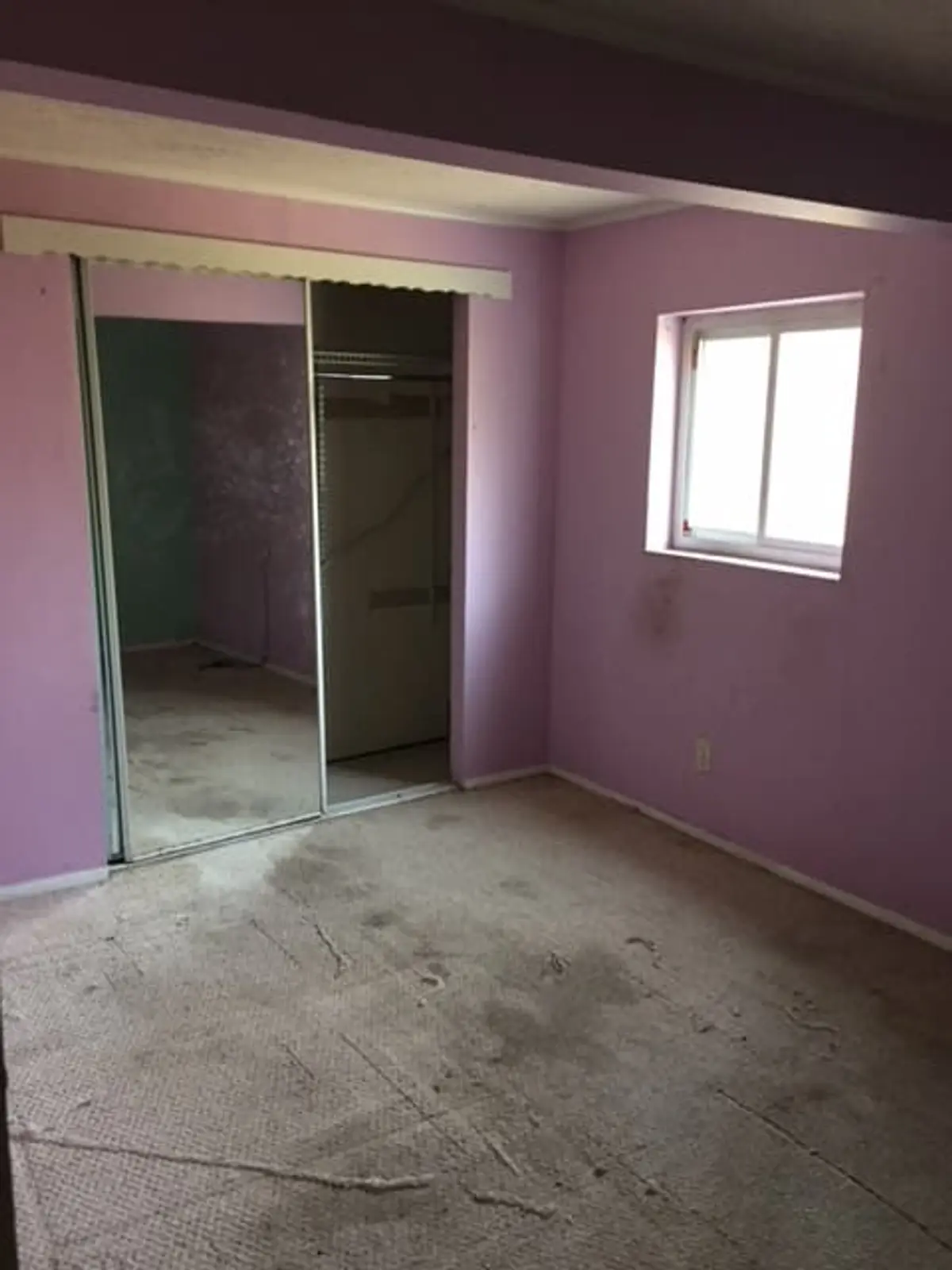
Vacant houses deteriorate faster than occupied ones, and a parent's house where repairs were already being put off before the move into assisted living starts from behind.
A winter with nobody in it, a small leak nobody finds, a break-in on a street where people notice which homes are empty. None of that means selling this month. It means having the conversation with open eyes about what waiting costs, both in carrying charges and in the condition the house will be in by the time the family is ready. A house left empty through the first winter after a move into assisted living is rarely in better shape the following spring.
How we arrive at a number on a parent's house after a move into assisted living
For a parent's house after a move into assisted living, the starting point is the price once it is fully repaired. We subtract what the repairs cost and then a margin for being wrong about the price or the repairs. No algorithm and no trade secret: that is how the number is built.
- What it is worth repaired. Not the Islip median of $677,000 on its own, but what houses like yours on your street actually closed at recently.
- What the work costs. Roof, boiler, electric, the kitchen and bath. In Islip the stock is largely colonial and cape cod, and on houses that age the mechanicals are usually the expensive part rather than the cosmetics.
- How long we will hold it. The median Islip house goes under contract in about 35 days once it is showable, then waits 45 to 60 days more on the buyer's lender. Ours has to get to showable first, and we carry taxes and insurance across the whole of it.
- What we are wrong about. Every renovation turns up something nobody could see on the walk-through. We build that risk into the price, and it explains a good part of why cash offers come in below retail.
Where our margin actually comes from
Plainly, because buyers are often vague here: we run millions of dollars of construction a year. At that volume we pay contractor prices for materials and keep steady crews working twelve months a year, so a given renovation costs us roughly half of what a homeowner pays for the same job.
That is where our margin is. It is also why fixing the house up yourself first rarely pays off. You would be paying retail for the work and counting on the sale price to cover it, and it usually does not. We earn our money on the construction side, not on the price we pay you.
If the figure does not work, say so; we would rather know than try to talk you round. We will look at what is going on and tell you honestly which options make sense, including the ones without us. Listing with an agent is the better route for plenty of sellers, and we will tell you if it is yours.
What we actually do when a parent moves into a nursing home
Most of these calls are not really about a price. They are about a family trying to work out what order to do things in while a parent settles into assisted living.
So that is where we start. We will tell you what the Islip house is worth in writing, what selling it on the open market would take, and what the empty months cost in the meantime. If there is a power of attorney question or a question about the benefits paying for assisted living sitting underneath it, we will say so and send you to an elder law attorney before we talk about buying anything.
The tax question worth asking first
Tax treatment is a CPA's profession and this is the situation where that call matters most. Selling a parent's house now and inheriting it later sit on different footing.
On an Islip house bought decades ago and held through every boom since, the difference can be large enough to outweigh everything else the family is weighing, including the monthly nursing home bill. Ask the CPA specifically about basis. Then come back to the question of who buys the house and when.
How selling a parent's house after a move into assisted living in Islip works
- 1
Tell us where it is
Just the address in 11751 and roughly what shape it is in. It takes a couple of minutes. Leave the house exactly as it is; we do not need it tidied, photographed or fixed.
- 2
We walk through it once
A single visit by one person, normally under thirty minutes. With a colonial or cape cod built when most of Islip was, the roof, heating and electric matter far more to us than the kitchen does.
- 3
You see the number
Within a day you get our offer as one written figure. Get a Suffolk County agent's opinion alongside it if that helps. For a house that could go on the market as it stands, listing may come out ahead, and we will tell you if so.
- 4
Closing happens on your date
If you need it done quickly, it can be. If probate, a tenant or a move means waiting, we wait. What you skip is the 80 to 95 days an Islip listing usually spends on finding a buyer and then on that buyer's lender.
If the Islip house is what pays for the nursing home
Then the timing question is not sentimental, it is arithmetic. Assisted living costs run monthly and are largely fixed. A parent's house produces one number, once.
What matters is knowing how many months of assisted living or nursing home care the proceeds actually cover, and that depends on a real figure rather than an estimate drawn from a neighbor's sale. We will put one in writing at no cost and with no expectation, precisely so the family can do that math properly. The median house in Islip sold for $677,000 and took about 35 days to go under contract, then another 45 to 60 days waiting on the buyer's mortgage. That is 80 to 95 days in total, for a house that was ready to show on day one.
Common questions
Can we sell a parent's house to pay for assisted living?
Yes, and for many families the house is the plan for funding a nursing home place. What matters is doing it in the right order: authority to sign first, benefits advice second, sale third. We will give you a written number on the Islip house at any point in that sequence, including before the first two are resolved, so the family can see what it is actually working with.
Can my parent still sell their Islip house if they have dementia?
That depends on capacity and on whether a power of attorney is already in place. It is a legal question and an important one, so speak to an elder law attorney before anything else happens.
We are not ready yet. Is that a problem?
Not at all, and it is the normal answer. Families take months over this while a parent settles into care. The number gets refreshed whenever you come back.
Do we have to clear the Islip house before selling?
No. Take what matters to your parent and to the family, and leave the rest exactly where it is. The clearing is ours to handle after closing, and it is the same answer whether your parent moved into assisted living last month or last year.
What if my siblings do not agree yet?
Get the number first and let the family discuss it from there. If the decision belongs to whoever holds the power of attorney for your parent, an elder law attorney can tell you exactly who signs and what the rest of the family's role is.
Will selling affect the benefits paying for my parent's nursing home care?
It can, and this is the question to answer before you sell rather than after. An elder law attorney will cover it in one meeting, and we tell every family the same thing regardless of whether we end up buying.